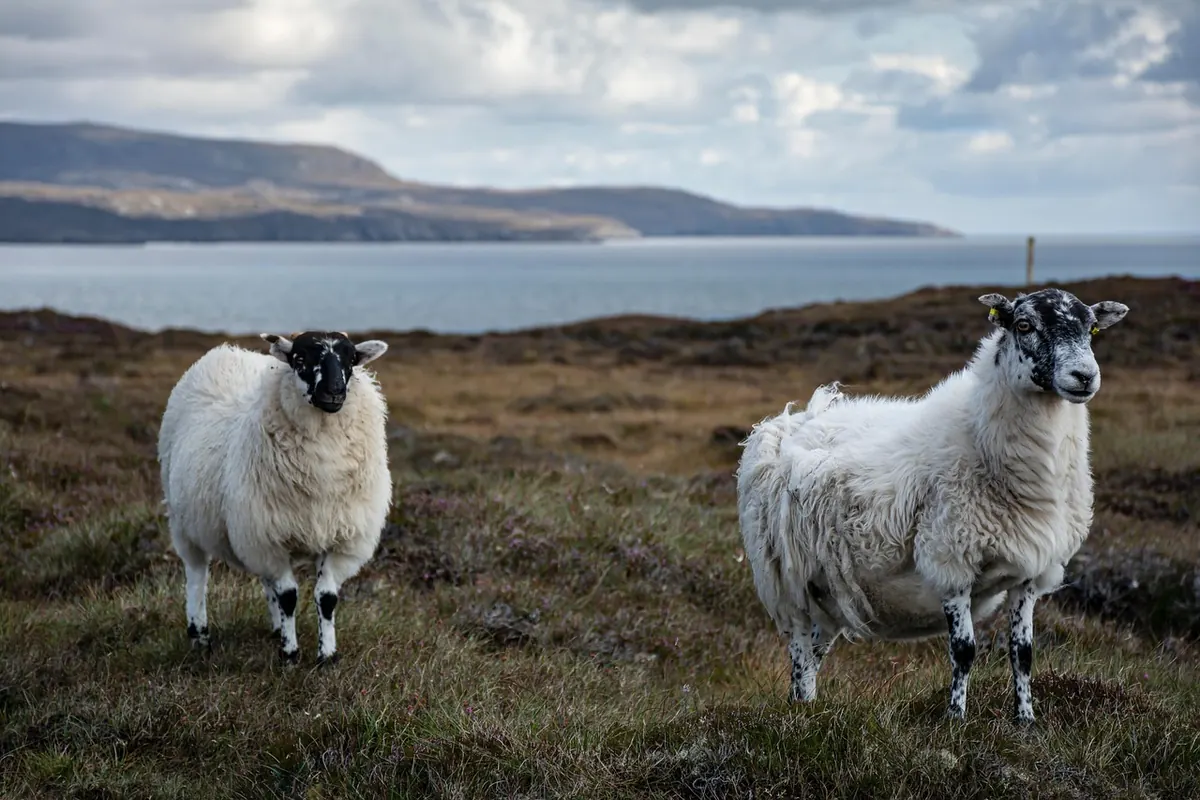
The Cotswold sheep is an easy sheep to love and a surprisingly forgiving one to make. Long, lustrous ringlets cover most of the body, which means the fleece does a lot of the tidying up for you. Underneath all that wool you only need a simple barrel body, a small head and four sturdy legs. If you can stab a needle into a ball of wool repeatedly — and you can — you have the core skill already.
Needle felting uses a barbed needle to tangle wool fibres together. Push the needle in, pull it out, and the fibres catch on the barbs and lock. Keep doing that in the same spot and the wool tightens into a dense, solid shape. No water, no soap, no sewing.
Two things matter more than talent. First, always work over a foam pad or brush mat, or you will blunt your needle on the table and scratch the surface. Second, stab straight down and keep your fingers out of the way. A felting needle is sharp, and it hurts far more than a sewing pin. Many felters wear a leather finger guard on their holding hand until the habit of safe stabbing becomes automatic.
Begin with natural colours. A cream sheep with a dark face and dark legs needs no dyeing and looks right straight away.
Cotswolds are big, low and rectangular. Aim for a body roughly twice as long as it is tall, with a slight dip along the back and a rounded rear. The head is small relative to the body, carried forward and low rather than up in the air like a goat. The ears stick out sideways, and a thick forelock of wool flops over the face.
One detail worth noticing before you start: the locks grow downwards, with the weight of the fleece pulling them into loose ringlets. If you place your locks in tidy horizontal rows you will get a neat, slightly toy-like sheep. If you place them in overlapping downward rows, the way they grow on a real animal, you get something that reads as a Cotswold at a glance.
You can leave the face cream and cover it with locks, or use a soft grey-brown wool to suggest the darker face many Cotswolds have. Either is fine. What matters is keeping the face neat: a smooth, well-felted surface in a contrasting colour makes the whole figure look intentional.
Take a single lock, lay it on the body, and stab only its top end, letting the curl hang free. Work in rows from the tail towards the head, and leave the face and the lower legs bare.
Resist the urge to felt the curls flat. The whole charm of the breed is that the fleece stands away from the body. Once the sheep is covered, use your scissors to trim any locks that stick out at odd angles, but cut sparingly — it is much easier to trim more later than to felt length back on.
Give the finished sheep a final tidy: smooth the face with your finest needle, trim the belly line, and brush off loose fibres. A light dusting with a soft brush fluffs the locks nicely. Stand it on a piece of slate or a small wooden offcut, and keep it out of direct sunlight so the wool does not fade.
Work in short sessions. Felting is repetitive, and your wrist and shoulder will tell you when you have done enough; twenty minutes at a time is plenty while you are learning. Store your needles in a cork, keep the wool in a breathable bag with a few lavender heads to deter moths, and keep everything away from curious cats.
Once you have one sheep standing on the shelf, the obvious next step is a small flock in different fleece shades, or a lamb made at two-thirds scale. The skills transfer directly, and the second one takes half the time.
Photo: hunt-er / Pixabay

Most figure-painting problems start before the brush touches the model. Here are the priming, base coating and...

Turn pinecones, twigs and dried orange slices into tree ornaments, garlands and wreaths, with clear drying methods,...

Learn how to date antique maps by examining paper, printing methods, imprints, geographic clues, colour and...

Explore hobbies in the Cotswolds.
