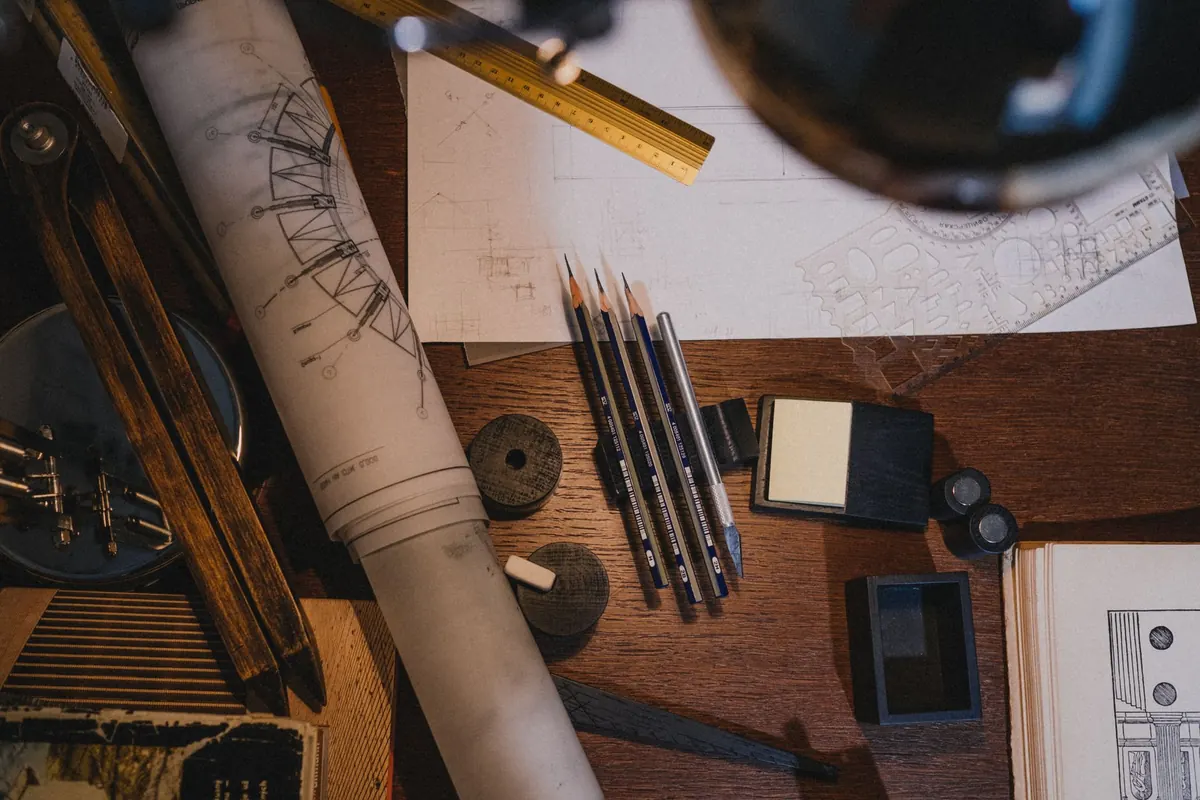
The first time you stand in a model shop, the numbers on the boxes look like a private code. 1:72, 1:48, 1:35, 1:24 — they all describe the same simple idea, but the practical differences between them are bigger than most beginners expect. Get the scale right at the start and everything that follows — the kits you can actually find, the detail you can add, the shelf space you need — becomes much easier.
Here is what those numbers mean, which ones are worth your time, and how to pick a scale you will still be happy with a year from now.
A scale is a ratio between your model and the real thing. In 1:72, every 72 centimetres on the real aircraft becomes one centimetre on your model. The smaller the number after the colon, the bigger the model: a 1:24 car is roughly twice the length of the same car in 1:48.
You can work out the finished size before you buy, which is worth doing if space is tight:
A Spitfire's wingspan is about 11.2 metres, or 1,120 centimetres. In 1:72 that comes out at roughly 15.6 centimetres. In 1:48 it is about 23.3 centimetres. Same aeroplane, very different presence on the bench.
You will see scales written as 1:72, 1/72 or "72nd". They mean the same thing. You will also occasionally meet "box scale" kits from the 1950s and 60s, where the model was sized to fit the packaging rather than a consistent ratio. Treat those as their own thing.
1:72, 1:48 and 1:32 are the three sensible choices. Start at 1:72 if you want variety and low cost. Move to 1:48 when your eyes or your fingers want more room. Choose 1:32 only when you have decided you love one particular aircraft enough to give it half a shelf.
1:35 dominates, and that is a good thing — it means tracks, photo-etched sets, resin conversions and figure kits are all easy to find. 1:72 armour exists and is cheaper, but detail is compressed and small parts are unforgiving.
1:700 for a fleet on a bookcase, 1:350 for a single centrepiece. Rigging and railings are the real challenge in either, and both reward patience over speed.
Railway modelling runs on its own scale system — OO, HO, N — with 1:76 and 1:87 covering most British and continental layouts. For standalone figures, 1:35, 1:16 and larger are common, and the bigger the figure, the more painting skill it demands.
Once you settle on a scale, your spare parts box starts working for you. Leftover decals from a 1:48 fighter can dress up the next one. Figures, fuel drums, oil drums and base materials all fit together. Vehicles and aircraft of the same scale can share a diorama without looking wrong.
You also learn the size of things. After a few 1:72 builds you can look at a part and know whether it is a seat or a wheel without checking the instructions. That instinct takes much longer if you hop between scales every project.
There is one place where mixing is fine: a scene with real depth. A 1:72 aircraft on a 1:76 vehicle looks acceptable if they are separated by distance and not sitting nose to nose. A 1:48 figure next to a 1:72 tank never works — the tank looks like a toy.
The rule is simple. Keep figures, vehicles and buildings in a single scale, and only use a smaller scale for something clearly far away at the back of the base.
Before you commit, measure honestly. A 1:32 fighter can need 40 centimetres of wingspan; a 1:700 battleship might need 30 centimetres of length. Add the base, the case and the space to swing a paint brush, and the true footprint is larger than the model.
Cost generally rises with size, but not evenly. Small scales are cheaper per kit and let you build more; large scales cost more and take longer, which can actually suit a slow builder. Consider also where unfinished projects will live. A 1:72 kit fits in a drawer; a 1:24 truck does not.
If you want the easiest start, pick 1:72 aircraft or 1:35 armour. Both have enormous kit ranges, plenty of beginner-friendly options and a healthy supply of aftermarket parts once you want them. Buy one kit, build it, and see how the size feels in your hands.
If detail and painting are what attract you, go straight to 1:48 or 1:35. If you are short of space or want to build a fleet, look at 1:144 or 1:700. Whichever you choose, buy two or three kits in that scale before you buy anything else, and let your spares box, your paint collection and your shelf grow around it.
Photo: Ron Lach / Pexels
Most figure-painting problems start before the brush touches the model. Here are the priming, base coating and...

Turn pinecones, twigs and dried orange slices into tree ornaments, garlands and wreaths, with clear drying methods,...
Learn how to date antique maps by examining paper, printing methods, imprints, geographic clues, colour and...


Explore hobbies in the Cotswolds.
