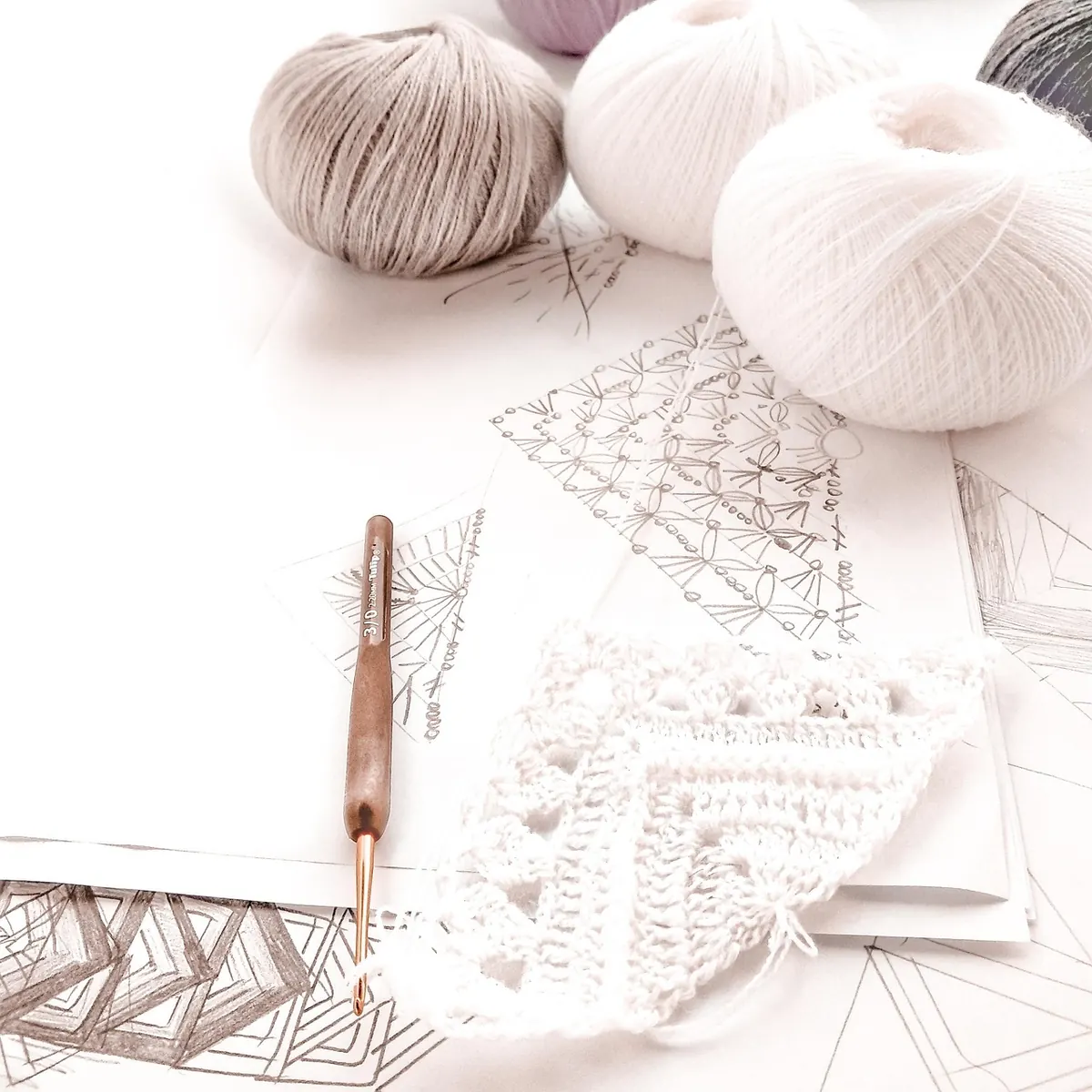
Two balls of the same yarn can turn into a soft, draping sweater or a firm, structured basket. The difference is the tool you pick up. Knitting and crochet sit side by side on every craft shop shelf, and beginners often wonder whether they should commit to one or learn both. The honest answer is that they suit different instincts and different projects. One is built from rows of interlocking loops held on two needles; the other from single loops pulled through each other with a hook. Here's how they compare where it matters: tools, technique, and the things you'll actually want to make.
In knitting, you hold an entire row of live loops on a needle while you work the next row. Those loops interlock in a series of V shapes, which is why knitted fabric stretches, drapes and springs back. It also curls at the edges, which is the source of many a beginner's confusion.
In crochet, you never hold more than one loop. A hook pulls a new loop through the one on your hook, and stitches stack on top of each other like bricks. The result is denser, sturdier and far less stretchy. Crocheted fabric holds its shape, which is exactly why it makes such good bags, baskets and toys.
That single structural difference explains almost everything else. Stretchy and fluid? Knit it. Firm and sculptural? Crochet it.
You need less than you'd think. Both crafts use the same yarn, and the extras are nearly identical, so the only real difference is what goes in your hands.
Start with the size printed on the yarn label, then adjust once you can see how your own tension behaves. If you knit tightly, go up a size; if loosely, go down. There's no right answer, only the one that gives you fabric you like the feel of.
Knitting rests on two stitches. Learn to knit and to purl, along with casting on and binding off, and you can make garter stitch, stocking stitch and ribbing without learning anything else. Everything from a scarf to a sweater is those two movements rearranged.
Crochet builds similarly, but in height. You start with a slip knot and a chain, then work stitches into that chain: slip stitch, double crochet, treble, and so on. Each taller stitch simply wraps the yarn more times before it's pulled through.
Knitting asks both hands to do different jobs at once, and dropped stitches can run down a column like a ladder in a stocking. That frightens people early on. Crochet asks less of your non-dominant hand and, because you only ever have one live loop, a mistake usually means pulling the yarn back to the last good stitch. Many beginners find crochet the more forgiving starting point. Others find knitting's steady rhythm easier to settle into, precisely because there's less counting.
Match the craft to the fabric and you'll rarely be disappointed.
Bulky yarn plus a big hook or needle is the fastest route to a finished object, and the cheapest way to find out whether you enjoy the process at all.
Crochet generally uses more yarn than knitting to cover the same area, because the stitches are denser and taller. That matters if you're planning a large blanket and buying yarn in batches. Simple crochet stitches also tend to work up faster than knitting, which is why crocheted blankets appear so often in progress photos. Knitting is slower per row but produces a finer, more elastic fabric.
Portability is a quiet advantage. One hook and one ball of yarn fit in a coat pocket, and nothing can slide off. Knitting on long straight needles is awkward on a train, though circular needles solve most of that.
Take breaks either way. Long sessions with any repetitive hand motion can leave wrists and shoulders sore, so stretch and vary your grip. If you have arthritis, a previous hand injury or persistent pain, speak to a physiotherapist or your doctor about what's suitable before you commit to a big project.
Whichever you choose, begin with a dishcloth, a coaster or a twenty-centimetre square. It's cheap, it's finished quickly, and it teaches you to read your own fabric — where a stitch sits, what a mistake looks like, how to fix it without undoing an hour's work. Count your stitches at the end of every row for the first few weeks. It sounds fussy and saves a lot of heartache.
The two crafts are not rivals. Most people who stick with yarn end up using both: knitting for garments with drape, crochet for edges, toys and anything that needs to hold a shape. Learn one properly, give it a month, then learn the other. You'll double the projects you can make without buying much more than a hook.
Photo: alpavela / Pixabay
Most figure-painting problems start before the brush touches the model. Here are the priming, base coating and...
Turn pinecones, twigs and dried orange slices into tree ornaments, garlands and wreaths, with clear drying methods,...
Learn how to date antique maps by examining paper, printing methods, imprints, geographic clues, colour and...

Explore hobbies in the Cotswolds.
